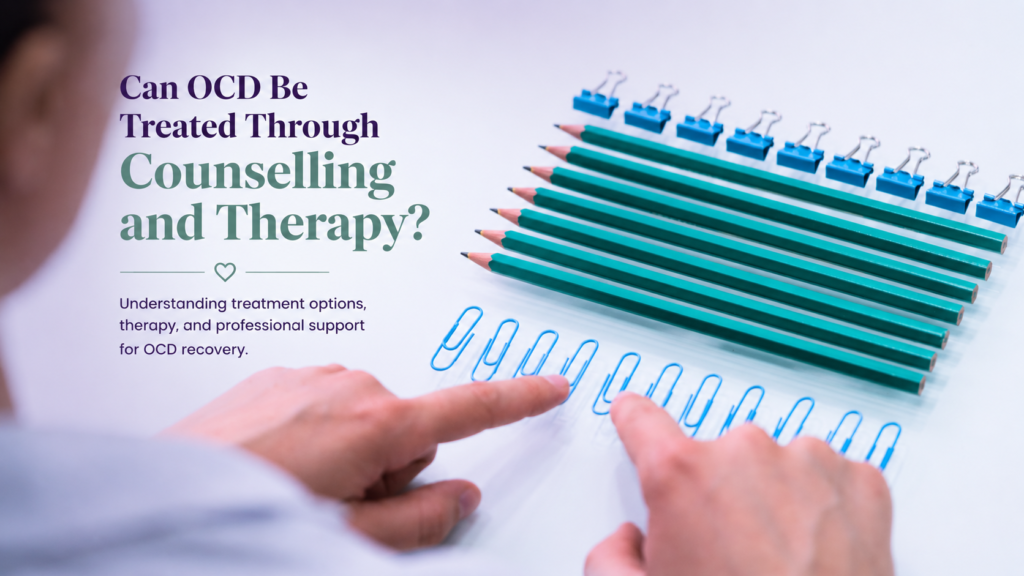
Can OCD Be Treated Through
Counselling and Therapy?
Obsessive Compulsive Disorder is treatable. Professional OCD counselling and therapy — including CBT and ERP — at Shweta Heals in Faridabad offers individuals across Delhi NCR a real, evidence-based path to lasting relief and genuine freedom from OCD.
Obsessive Compulsive Disorder (OCD) is one of the most misunderstood mental health conditions — frequently minimised as a quirk or a preference for orderliness, when in reality it is a clinical condition that causes significant distress and meaningfully impairs daily life. The answer to the question “Can OCD be treated through counselling and therapy?” is an emphatic yes. With the right professional support — particularly evidence-based counselling at Shweta Heals in Faridabad — individuals with OCD can achieve genuine, lasting freedom from the obsession-compulsion cycle that has been controlling their lives.
What Is OCD? Understanding Obsessive Compulsive Disorder
More than a personality trait — OCD is a clinical mental health condition
Obsessive Compulsive Disorder (OCD) is a recognised mental health condition characterised by two core features: obsessions — persistent, intrusive, unwanted thoughts, images, or urges that cause intense anxiety or distress — and compulsions — repetitive behaviours or mental rituals performed in an attempt to neutralise the anxiety generated by those obsessions.
The crucial thing to understand about OCD is that it is not about being “too clean” or “too organised.” It is about a specific, self-reinforcing psychological cycle in which intrusive thoughts generate overwhelming anxiety, compulsive responses provide temporary relief, and that temporary relief reinforces the compulsion — creating a cycle that, without professional therapeutic intervention, typically escalates rather than resolves over time.
In Faridabad, Delhi, and across Delhi NCR, OCD is significantly underdiagnosed — partly because individuals often feel profound shame about their intrusive thoughts, partly because many OCD presentations do not involve the stereotypical cleaning or checking behaviours, and partly because the condition is frequently mistaken for anxiety, perfectionism, or simple habit.
“OCD is not about being tidy or careful. It is about being trapped in a cycle of thoughts and responses that feels completely uncontrollable — and that is what professional counselling is specifically designed to address.”Shweta Mittal — Counsellor & Founder, Shweta Heals, Faridabad
The OCD Cycle — Why It Persists Without Treatment
Understanding the Obsession-Compulsion Cycle
Intrusive Thought
An unwanted, distressing thought, image, or urge enters consciousness
Anxiety Spikes
The thought generates intense anxiety, fear, or a sense of wrongness
Compulsion Performed
A ritual or behaviour is performed to neutralise the anxiety
Temporary Relief
Anxiety reduces briefly — reinforcing the compulsion and the cycle
Understanding this cycle is fundamental to understanding why OCD does not resolve on its own. Each time a compulsion is performed to relieve anxiety, the brain learns that the compulsion works — strengthening the neural pathway that connects the intrusive thought to the compulsive response. The OCD cycle literally grows stronger the more it is engaged with. This is precisely why professional therapeutic intervention that interrupts this cycle — through CBT and ERP — is so effective.
Common Types of OCD
OCD presents in many forms — professional counselling addresses all of them
Contamination OCD
Obsessive fear of contamination by germs, chemicals, or illness — leading to excessive cleaning, washing, or avoidance behaviours.
Checking OCD
Persistent doubt about whether tasks have been completed — leading to repetitive checking of locks, appliances, switches, or messages.
Intrusive Thought OCD
Distressing, unwanted thoughts about harm, violence, or taboo subjects that feel threatening — despite the person having no desire to act on them.
Symmetry and Order OCD
Intense distress when objects or actions are not arranged “just right” — leading to repetitive arranging, counting, or repeating.
Relationship OCD (ROCD)
Obsessive doubts about the validity of relationships — constantly questioning love, compatibility, or whether one has found the “right” partner.
Pure O (Primarily Obsessional)
OCD where compulsions are primarily mental rather than behavioural — including mental reviewing, reassurance-seeking, and thought suppression.
Signs and Symptoms of OCD That Need Professional Support
Key indicators that OCD requires professional counselling rather than self-management
Spending 1+ Hours on Rituals Daily
When obsessions and compulsions consume a significant portion of the day, professional intervention is clearly needed.
Awareness of Irrationality with Inability to Stop
Knowing the thoughts or behaviours are excessive but feeling completely unable to stop them — a hallmark of OCD.
Significant Distress Around Intrusive Thoughts
Intense shame, guilt, or fear generated by intrusive thoughts — particularly thoughts of harm, contamination, or forbidden subjects.
Work or Academic Impairment
OCD significantly affecting concentration, productivity, and functioning in professional or educational environments.
Relationship Strain from OCD Behaviours
Compulsive behaviours or reassurance-seeking affecting personal relationships — causing frustration, avoidance, or conflict with loved ones.
Avoidance of Triggers
Structuring daily life around avoiding OCD triggers — progressively restricting activities, places, or interactions to manage anxiety.
Can OCD Be Treated Through Counselling? The Evidence-Based Answer
Yes — and the evidence is unambiguous. OCD is one of the most researched mental health conditions, and the therapeutic approaches developed specifically for it have decades of clinical evidence behind them. Cognitive Behavioural Therapy (CBT) and Exposure and Response Prevention (ERP) are internationally recognised as the gold-standard treatments for OCD — consistently producing meaningful, lasting reduction in OCD symptoms for the majority of individuals who engage in proper professional therapy.
At Shweta Heals in Faridabad, Shweta Mittal provides professional OCD counselling that combines these evidence-based approaches with a genuinely personalised, compassionate therapeutic relationship. OCD counselling is available in-person and online — making expert support accessible for individuals across Faridabad, Delhi NCR, Badarpur, Ballabhgarh, and all of India. As explored in our broader guide on stress and anxiety counselling, the professional therapeutic relationship is one of the most powerful factors in treatment outcomes.
Therapy Approaches for OCD at Shweta Heals
Evidence-based, personalised treatment that addresses OCD at its root
Exposure and Response Prevention (ERP)
ERP is the single most evidence-based therapeutic intervention for OCD. It involves gradually and systematically exposing the individual to their feared thoughts or situations while practicing not performing the compulsive response — directly breaking the obsession-compulsion cycle at its root. This is done progressively and carefully under professional guidance, always at a pace the individual can sustain, with each step building courage and confidence for the next.
Cognitive Behavioural Therapy (CBT) for OCD
CBT helps individuals identify and challenge the specific beliefs and thinking patterns that fuel their OCD — including overestimation of threat, inflated responsibility, perfectionism, intolerance of uncertainty, and the belief that having a thought is equivalent to acting on it. By restructuring these beliefs, CBT reduces the power that intrusive thoughts have over emotions and behaviour — progressively weakening the OCD cycle from the cognitive side.
Acceptance and Mindfulness Techniques
Mindfulness-based approaches help individuals develop a different relationship with their intrusive thoughts — learning to observe them without engagement or judgment, rather than fighting, suppressing, or neutralising them. This creates a crucial psychological distance from obsessive thoughts and reduces the emotional response that fuels the compulsive cycle. Mindfulness techniques are integrated throughout the counselling process at Shweta Heals.
Shame Reduction and Self-Compassion Work
Many individuals with OCD carry profound shame about the content of their intrusive thoughts — particularly when those thoughts involve harm, taboo subjects, or disturbing images. A critical component of effective OCD counselling is helping individuals understand that intrusive thoughts reflect OCD, not their character — and developing genuine self-compassion that reduces the shame that amplifies OCD symptoms.
Anxiety Management and Relapse Prevention
Alongside the core therapeutic work, individuals develop practical anxiety management tools — including breathing techniques, grounding strategies, and effective ways to interrupt the compulsive cycle in real-time. A personalised relapse prevention plan equips individuals with the knowledge and tools to recognise and respond to OCD triggers confidently and effectively long after the formal therapy period concludes.
How OCD Counselling Helps — Real Benefits
Breaks the Obsession-Compulsion Cycle
Through ERP and CBT, the core feedback loop that maintains OCD is systematically disrupted — reducing the frequency and intensity of both obsessions and compulsions progressively over the course of therapy.
Reduces Intrusive Thought Power
Intrusive thoughts lose their emotional charge through therapeutic work — moving from overwhelming, distressing events to passing mental experiences that no longer require compulsive responses.
Restores Daily Functioning
As OCD symptoms reduce, individuals progressively reclaim their time, their attention, their relationships, and their capacity to engage with work, studies, and daily life without the constant disruption of OCD.
Rebuilds Self-Worth and Confidence
OCD systematically erodes self-worth through shame, guilt, and self-doubt. Counselling restores a healthier, more accurate self-perception — helping individuals see themselves beyond their OCD experience.
Improves Relationships
OCD significantly impacts relationships through reassurance-seeking, avoidance, and the emotional demands of the condition. As OCD reduces, relationship quality typically improves meaningfully as a natural consequence.
Provides Long-Term Skills
Unlike medication alone, therapy builds lasting psychological skills — individuals leave the counselling process equipped to manage OCD triggers confidently and maintain their progress independently.
Shweta Mittal — Best OCD Counsellor in Faridabad
Faridabad’s Trusted Mental Health Counsellor for OCD
Shweta Mittal, founder of Shweta Heals, brings over 10 years of professional counselling experience, a Gold Medalist MSW qualification, and a strong legal background to every OCD therapy session. Her approach is always personalised — beginning with a thorough assessment of the individual’s specific OCD presentation, triggers, and history, followed by a structured therapy plan that addresses both the psychological and emotional dimensions of OCD comprehensively.
With 5,00,000+ sessions across schools, colleges, hospitals, and corporates, Shweta’s depth of experience with complex mental health presentations gives her a rare and comprehensive perspective. Her sessions are completely confidential, delivered with genuine warmth, and focused always on real, lasting results for each individual.
Online & Offline OCD Counselling
In-Person — Faridabad
- Face-to-face OCD sessions at Sector 12 clinic
- Real-world exposure work supported in person
- Non-verbal communication observed in full
- Walk-in and appointment sessions available
- Faridabad, NIT, Ballabhgarh, Badarpur, NCR
Online — Pan India
- Equally effective for most OCD presentations
- Sessions in familiar home environment
- Flexible scheduling — evenings & weekends
- Complete privacy and confidentiality maintained
- Available for individuals across all of India
Other Counselling Services at Shweta Heals
Stress & Anxiety Counselling
Evidence-based anxiety therapy for individuals dealing with chronic stress, anxiety disorders, and overthinking.
Relationship Counselling
Professional support for individuals and couples navigating relationship challenges and emotional difficulties.
Marriage Counselling
Expert marriage therapy for couples dealing with communication breakdown, conflict, and emotional disconnection.
Career Counselling
Guidance for students after 10th & 12th and professionals navigating career decisions and transitions.
Areas Served
Visit or Contact Shweta Heals
OCD counselling — in Faridabad & online across India. First enquiry free & confidential.
Conclusion
OCD is a serious mental health condition — but it is absolutely treatable. With the right evidence-based therapeutic approach, delivered by a skilled and compassionate professional counsellor, individuals with OCD can achieve genuine, lasting freedom from the obsession-compulsion cycle that has been controlling their lives. The key is professional support — not willpower, not self-management, and not waiting for it to resolve on its own.
Shweta Mittal at Shweta Heals provides the best OCD counselling in Faridabad — combining gold-standard therapeutic approaches with a genuinely personalised, compassionate style that meets each individual exactly where they are. Online and offline sessions are available across Faridabad, Delhi NCR, and all of India. Contact Shweta Heals today — your first enquiry is completely free and confidential.
Related Reading
Why Trust Issues Destroy Relationships & How Therapy Helps
MarriageHow Couple Counselling Can Save a Relationship Before Divorce
CounsellingProfessional Married Couple Counselling in Faridabad
OnlineOnline Relationship Counselling in Delhi NCR
OCD Is Treatable. Professional Help Is Here.
Book a confidential OCD counselling session with Shweta Mittal — in Faridabad or online across India. Your first enquiry is free.
Frequently Asked Questions About OCD Treatment
Expert answers about OCD counselling and therapy in Faridabad and Delhi NCR
Yes — absolutely. Counselling and therapy, particularly Cognitive Behavioural Therapy (CBT) and Exposure and Response Prevention (ERP), are among the most evidence-based and effective treatments for OCD. At Shweta Heals in Faridabad, Shweta Mittal provides personalised, professional OCD counselling for individuals across Faridabad, Delhi NCR, Badarpur, Ballabhgarh, and online across all of India.
OCD (Obsessive Compulsive Disorder) is a recognised mental health condition characterised by persistent, intrusive, unwanted thoughts or obsessions that cause significant anxiety, and compulsive behaviours or mental rituals performed in an attempt to reduce that anxiety. OCD is not a personality quirk — it is a clinical condition that significantly impairs daily life and requires professional therapeutic support to address effectively.
Common signs include persistent intrusive thoughts about harm, contamination, symmetry, or forbidden subjects; repetitive checking, cleaning, counting, or arranging behaviours; mental rituals such as praying or repeating phrases; spending more than an hour daily on obsessions or compulsions; significant distress when compulsions cannot be performed; and awareness that the thoughts are irrational combined with an inability to stop them.
Shweta Heals provides counselling support for all common forms of OCD including contamination OCD, checking OCD, symmetry and order OCD, intrusive thought OCD (harm, sexual, religious), relationship OCD (ROCD), health anxiety OCD, and Pure O (primarily obsessional OCD where compulsions are mental rather than behavioural).
Cognitive Behavioural Therapy for OCD is a structured, evidence-based therapeutic approach that helps individuals identify and challenge the distorted thinking patterns and beliefs that fuel their obsessions, understand the role their compulsive responses play in maintaining the OCD cycle, and gradually learn to respond to intrusive thoughts differently — reducing their emotional power and frequency over time.
Exposure and Response Prevention (ERP) is widely considered the gold-standard therapeutic intervention for OCD. It involves gradually and systematically exposing the individual to their feared thoughts or triggers while practicing not engaging in the compulsive response — breaking the obsession-compulsion cycle at its root. ERP is done carefully and progressively under professional guidance, never overwhelming the individual.
Yes. For mild to moderate OCD, professional counselling — particularly CBT and ERP — is highly effective without medication. For moderate to severe OCD, a combination of therapy and appropriate medical support often produces the best outcomes. Shweta Mittal at Shweta Heals provides comprehensive counselling that addresses the psychological and emotional dimensions of OCD professionally and compassionately.
The number of sessions depends on the severity, duration, and type of OCD. Most individuals begin to experience meaningful reduction in OCD symptoms within 8 to 16 structured therapy sessions. A personalised therapy plan is created after the initial assessment and reviewed regularly. The goal is progressive, sustainable reduction in OCD’s impact on daily life — not just temporary symptom management.
Yes. Shweta Heals offers professional OCD counselling both in-person at the clinic in Sector 12, Faridabad, and online for individuals across Delhi, Delhi NCR, Badarpur, Ballabhgarh, and all of India. Shweta Mittal, Gold Medalist MSW and founder of Shweta Heals, provides personalised, evidence-based OCD therapy with over 10 years of professional experience.
Perfectionism and preference for orderliness are personality traits that do not significantly impair daily life. OCD is a clinical condition in which intrusive thoughts cause intense, uncontrollable anxiety and compulsive behaviours are performed to relieve that anxiety — even when the person recognises the behaviours as irrational. The key markers are significant distress, time consumption (typically 1+ hours daily), and meaningful impairment in daily functioning.
Yes. OCD significantly impacts relationships — through excessive reassurance-seeking, avoidance behaviours, time spent on rituals, irritability, and the emotional unavailability that OCD creates. Partners of individuals with OCD often develop accommodation behaviours that unintentionally maintain the OCD cycle. Shweta Heals provides integrated support combining OCD therapy with relationship counselling where needed.
OCD is caused by a combination of neurological factors (altered brain chemistry and circuitry), genetic predisposition, environmental stressors, significant life events or trauma, and learned patterns of thought and behaviour. It is not caused by weakness, moral failure, or a character defect. Understanding the causes is an important part of effective OCD counselling.
Yes. Every session at Shweta Heals is completely confidential. All information shared with Shweta Mittal remains entirely private — creating the safe, judgment-free environment essential for genuine therapeutic progress with OCD.
Yes. Shweta Heals provides OCD counselling support for adolescents, young people, and adults. OCD frequently first presents in adolescence, and early professional intervention consistently produces significantly better long-term outcomes. Sessions for younger clients are age-appropriate, gentle, and focused on building understanding and practical coping skills progressively.
OCD counselling helps individuals understand that intrusive thoughts are a feature of OCD — not a reflection of their true character or desires. Through CBT and ERP, individuals learn to observe intrusive thoughts without engaging with them, reduce the emotional response they trigger, and break the compulsive rituals that give the thoughts their power. Over time, intrusive thoughts lose their intensity and frequency significantly.
Yes. Online OCD counselling at Shweta Heals is equally effective as in-person sessions for most individuals. Online sessions provide additional benefits of complete privacy, no travel requirement, and flexible scheduling — making them particularly valuable for individuals whose OCD involves specific avoidance behaviours or for those across Delhi NCR and India who cannot attend in person.
OCD and anxiety disorders share the feature of excessive worry and distress, but OCD is specifically characterised by the cycle of intrusive obsessive thoughts followed by compulsive responses aimed at neutralising the anxiety. Generalised anxiety disorder involves pervasive worry without this specific obsession-compulsion cycle. Both are treatable through professional counselling at Shweta Heals.
Visit shwetaheals.com/contact, fill in the contact form, or call +91 8587998559. You can also email shwetaheals@gmail.com. In-person OCD counselling sessions are available at Space Center, Tf-01, 3rd Floor, Parsvnath City Mall, Sector 12, Faridabad-121007, Haryana. Online sessions are available across India. Your first enquiry is completely free and confidential.